Our Story
Written by Anouchka Freybe
We started the artist residency with a significant wind at our back.
Late 2020 and an out-of-left-field opportunity. Henning, an entrepreneur with a nose for experimental projects, purchased 20 acres of sloping, semi-arid benchland in the southern Okanagan. We were a little surprised. As he explained, the location wasn’t random. He was drawn to the potential of a colleague’s viticulture concept.
He shared photographs of the property that showed hills of long grasses, golden in late summer, plumes of sage brush, and ponderosa pine. There was a blurry photo of a three-story wooden home with a droopy veranda and a lush grape vine swallowing a porch. He asked what we thought.
Late 2020, and it was understandable—that heartfelt impulse to launch into a new direction and engage with others. And the home with a roaming grapevine also spoke to potential, along with layers of things underneath, unknown. Uncovering the next steps for both land and house would likely be done ‘learning-as-you-go’.
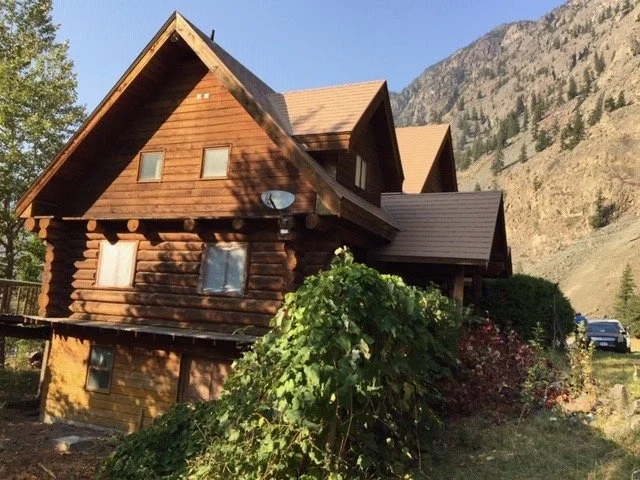
The initial photo that began conversations for an artists' retreat. While in the discussion, the words ‘it’s a place for artists’ came to mind. The words resonated. We could all feel some potential along those lines, but they were vague and likely different for each of us. The log house, facing west in a valley that funneled westerly winds, seemed to already identify as a temporary resting spot for people who were actively aware, who were spurned on by the views and channels of movement - the river, the highway, the steep headwalls that define the sight lines.
In the months that followed, the vineyard eventually took a back seat as the ‘place for artists’ project took over. We leaned fully into hope that what began as a general vision would actually take shape and function.
The former owner shared some of the house’s origins and backstory: in the early 1990s, a local family planned to build vacation cottages and a timber frame Bed & Breakfast. They hired Penticton-based Fred Maurer to design and build.
-
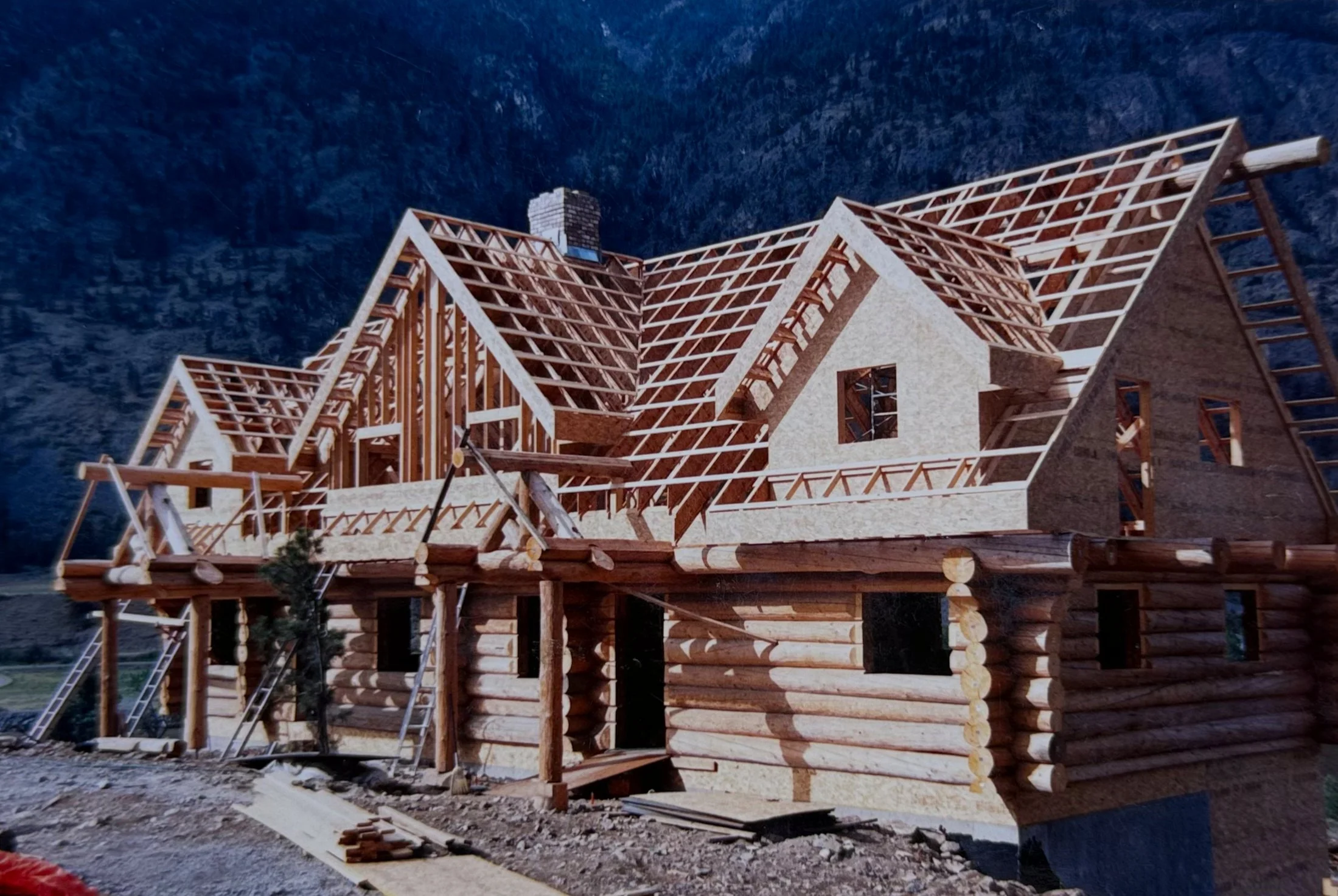
Framing the log house back in the early 1990s.
-
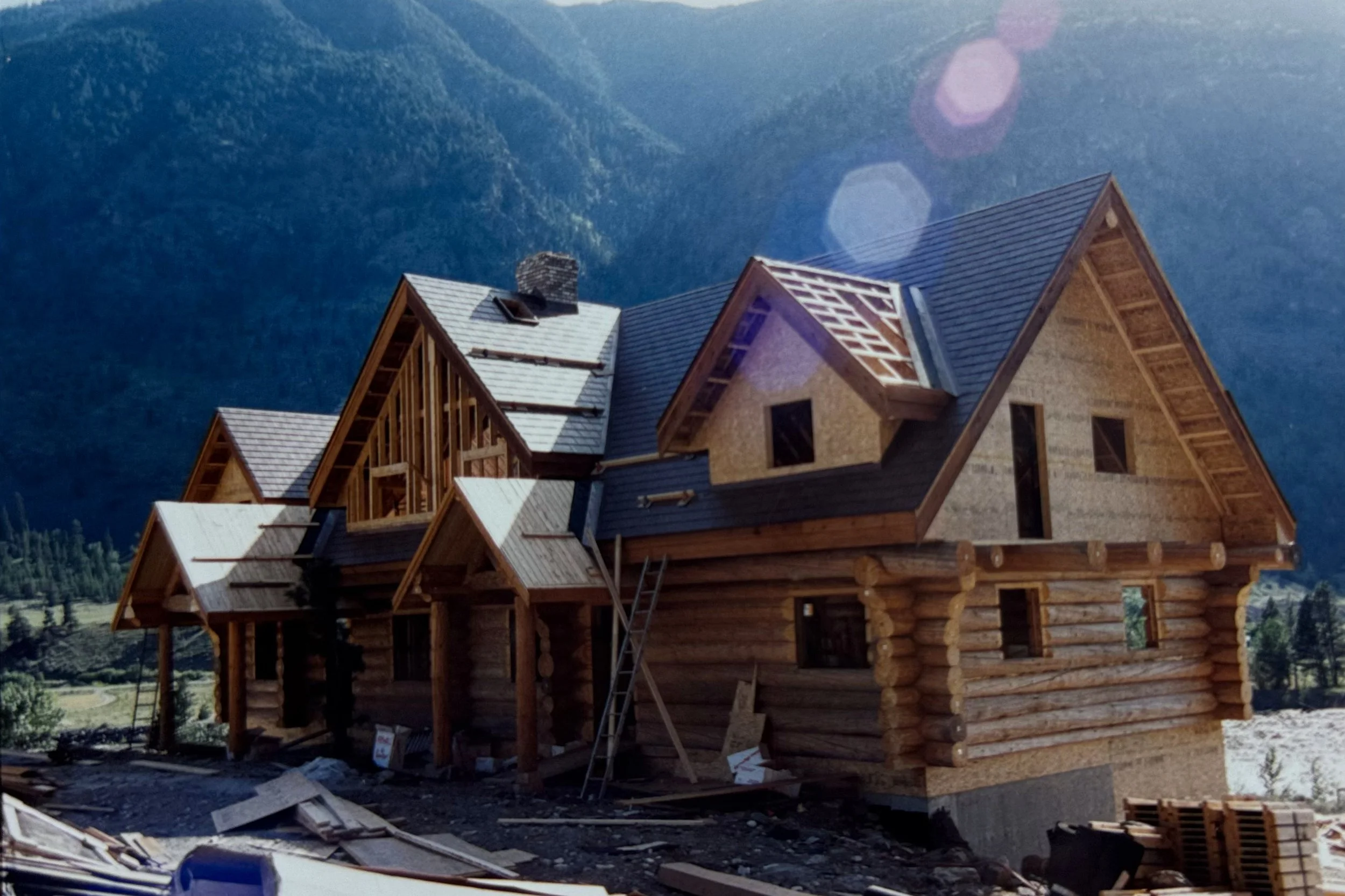
Building continued as the seasons progressed.
They called the B&B the “Log In”, and put care into marketing the secluded charm of their hideaway; you would know you had arrived at the right spot when you saw the house with two porches, one with a custom metal gate with two plate-sized cursive B’s. The story was open-ended, as the family never built the remaining cottages, and eventually the property was sold.
Vintage brochure from the 1990’s. The ‘Login B&B’ was a local favourite for folks passing through.These original owners had left a photo album that documented the build, and the images show the bright pine framing of a perfectly proportioned doll-like house. The rustic simplicity of the original design was a helpful guide. Henning found a talented local contractor and mapped out the changes to both halves of the house to match the needs of communal living and the lower-level studio floor. Brigitte, known for her trained critical eye, was incredulous. The retrofit was one thing, the operational side a whole other map of coordinates. She suggested asking for input from others.
We became an ad hoc advisory committee by rallying a small group of arts administrators and artists to help us shape the scope of the residency as an operation. They shared their expertise, motivated us to continue, and led us to some key resources - namely our first long-term artist-in-residence Isaiah, and our first staff member Reiko - and also initiated supportive relationships with ECADU and Griffin Art Projects.
It has taken years to understand what the business model could look like, and how to structure a sustainable work environment, for staff as well as the artists-in-residence. Our growth depended on the many contributions of others: Ali, our second long-term artist-in-residence, shared their experience with best practices and operational stability as our first Residency Manager; Ace, our first Penticton local, his passion for arts organizations that connect and sustain communities; Katie, our first alumni to lend organizational and design skills as administrator; and Sherry, our second alumni and second Residency Manager, who now steers the program with vision and commitment.
Brigitte would still be incredulous about what we were doing, but when driving the mountain highways or walking the grassland, or spending time with artists, she let herself be fully immersed. She always opened to what could be learned by being receptive, in the middle of a process.
In 2026 we incorporated as a not-for-profit organization, and now can look forward to how the SAR Society will support the residency’s sustainability. We set out to be a ‘place for artists’; now in our fifth year, we’re still on the path to nurturing what an artist residency can be.
Not long ago we were looking through the original house photos, and decided to call on the original builder for advice on log maintenance. He showed up 30 years after his last visit, and walked around the house and touched the logs. He said something to the effect of wood as an entity, with the ability to sense and hold on to energies: “Wood can affect how you feel, and if you’re comfortable here, it’s often because the wood is happy.” Suspended in those words, the previous years’ challenges and efforts gave us the gift of understanding ourselves as participating guests - of this house and the land. That moment also defined how our efforts will continue to focus on a framework of care and respect for the artistic process.
Images: Anouchka Freybe and Henning Freybe
Construction Images: courtesy of previous house owners